

Examples of Our Work
What therapy actually looks like, from the sessions to the materials to the progress. Photos are shared with written caregiver permission. Written examples are composites.
Session snapshots
From the therapy room
Real moments from therapy sessions and itinerant visits. Click any photo to enlarge.
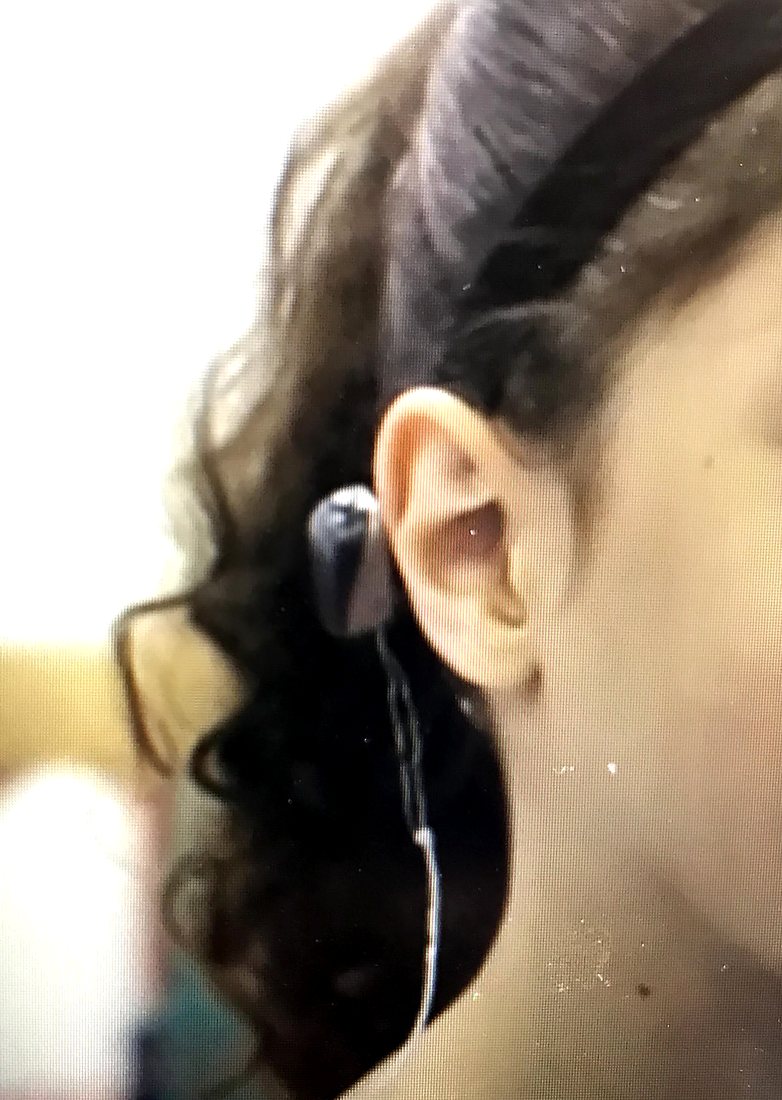

Photos of children are posted only with written caregiver permission.
Composite examples
What progress can look like
These are illustrative composites drawn from typical caseload work, not descriptions of specific children.
Infant, newly identified (birth to 12 months)
Starting point: Bilateral hearing aids fitted at four months. Caregivers unsure how to talk to a baby who “doesn't answer,” and struggling with full-time device wear.
Approach: Weekly caregiver-coaching sessions in the family's own routines. Building full-day device wear with a wear-time log, daily Ling checks, Learning to Listen Sounds paired with five toys, and heavy self-talk and parallel talk during feeding, diapering, and bath.
Where it went: Consistent all-waking-hours device use, reliable alerting and turning to sound, vocal turn-taking, and a caregiver who narrates confidently without being prompted.
Preschooler with cochlear implants (ages 3 to 5)
Starting point: Good detection, single words emerging, frequent breakdowns in noisy settings, limited sentence length, and a preschool team unsure how to support access.
Approach: Auditory hierarchy work from closed-set to open-set, auditory memory built from one to three critical elements, expansion and extension on every utterance, remote microphone use at preschool, and a short in-service for the classroom staff.
Where it went: Four-to-five word spontaneous sentences, following two- and three-step directions by listening alone, and asking for repetition instead of bluffing.
Elementary student, itinerant services (grades 2 to 5)
Starting point: Bright student in a charter school, keeping up on paper but missing incidental language, class discussion, and idioms; reluctant to use the remote microphone.
Approach: Weekly itinerant push-in and pull-out support, pre-teaching of unit vocabulary, explicit figurative-language instruction, classroom acoustic recommendations, and a self-advocacy sequence that moves from “I know how my ears work” to “I can ask my teacher for what I need.”
Where it went: Independent daily technology checks, student-initiated seating and repair requests, and measurable gains in listening comprehension of classroom discussion.
Ninth grader, from a 504 plan to an IEP (grade 9)
Starting point: A student entering high school on a Section 504 plan that offered accommodations and nothing else. Grades slipping as the language demands of coursework climbed. Teachers reporting that he “hears fine” but misses multi-step directions and loses the thread in class discussion. No specialized instruction, no progress monitoring, and no Teacher of the Deaf and Hard of Hearing on the team.
Approach: A functional listening evaluation in his actual classrooms, observation across several periods, and written documentation of how the hearing loss was affecting access to the general curriculum. We brought that evidence to the school team and walked them through the difference between accommodations under Section 504 and specially designed instruction under IDEA, then supported the referral for a full special education evaluation and served on the evaluation team as the DHH provider.
Where it went: Eligibility established under the deaf and hard of hearing category, an IEP with direct itinerant service time and measurable listening, language, and self-advocacy goals, and a student whose progress is now monitored rather than assumed.
Transition-age student (grades 11 to 12)
Starting point: Multiple teachers, rotating rooms, group projects, and a student who had stopped disclosing their hearing loss to peers.
Approach: Consultative itinerant support, teacher training on communication access, technology and streaming setup, and transition-focused self-advocacy work aimed at post-secondary independence.
Where it went: A student who can explain their hearing loss and accommodation needs to any adult in the building, and a plan that travels with them after graduation.
Curious what this would look like for your child?
Every plan starts with a conversation about where your child is now and where you would like them to be.